
Next-Gen Stadium Security: AI Surveillance and Contactless Access Systems
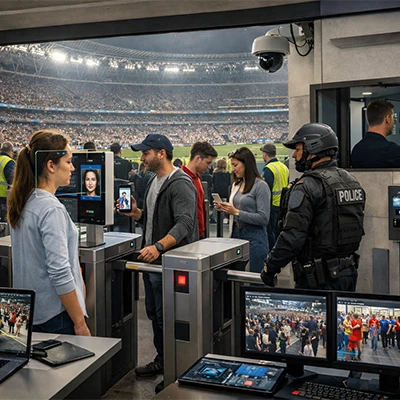
Security inside large sports venues is getting harder to manage, not easier. Bigger crowds, tighter entry windows, and higher expectations from visitors are putting pressure on operators to rethink how they approach safety. This article looks at how AI surveillance systems for stadiums and contactless access control systems for venues are being used on the ground. It focuses less on theory and more on how these systems actually change day-to-day operations, especially when combined into broader smart stadium security solutions.
Security at Stadiums Isn’t What It Used to Be
Anyone who has worked around large venues will tell you the same thing—crowd behavior has changed.
People don’t arrive as early as they used to. Entry peaks are sharper. Everyone expects to get in quickly, and patience for delays is basically gone. That alone puts pressure on stadium security systems, even before you factor in safety risks.
A lot of existing setups were built for a different kind of environment. They continue to depend extensively on manual inspections, physical scanning, and on camera feed operators. It functions, but to a certain extent.
Once volumes increase, cracks start to show. Long queues. Missed alerts. Slow responses.
That’s where the conversation around smart stadium security really began—not as a tech upgrade, but as a response to operational stress.
Cameras Were Never the Problem
Most stadiums already have more than enough cameras. Coverage isn’t the issue.
The problem is attention.
Put a person in front of dozens of live feeds, and sooner or later something slips through. It’s not a training issue—it’s just human limitation.
AI-powered stadium security systems try to solve that by changing how footage is used. Instead of expecting someone to watch everything, the system highlights what needs attention.
For example, AI surveillance systems for stadiums can pick up things like:
- unusual crowd movement
- people entering restricted areas
- objects left unattended
None of this is revolutionary on its own. What matters is speed. These alerts come in real time, which gives teams a chance to react early instead of after something escalates.
Video Analytics Sounds Fancy—But It’s Basically Pattern Recognition
A lot of people assume video analytics for stadium security is complex. In reality, it’s mostly about recognizing patterns and spotting when something doesn’t match.
Take crowd density.
Every stadium has predictable movement zones—entry gates, food areas, corridors. When those patterns shift too much, it usually means congestion is building.
With the right setup, operators don’t have to guess anymore. They can see pressure points forming and act before it becomes obvious to everyone else.
Same with queues.
If one gate starts slowing down, it doesn’t take long for frustration to build. Video analytics helps identify those slowdowns early, which makes it easier to redistribute crowds or open additional access points.
It’s not perfect, but it’s a lot more consistent than manual observation.
Entry Points Are Where Things Usually Go Wrong
If you look at most stadium incidents—not major ones, just everyday disruptions—they often start near entry gates.
Too many people. Not enough throughput. Small delays turning into crowd buildup.
This is why contactless access control has gained so much attention.
Contactless access control systems for venues remove some of the friction at the gate. Instead of manual ticket checks, people scan QR codes or use mobile passes. The process is faster, and more importantly, predictable.
That predictability matters.
When people move steadily, the entire environment feels more controlled. When they don’t, even small issues can escalate.
Contactless Doesn’t Just Improve Experience—It Reduces Risk
It’s easy to label contactless access control as a “fan convenience” feature. That undersells it.
Security-wise, a smoother entry puts less strain on the staff and the possibility of bottlenecks developing is minimal and bottlenecks are where things are apt to go wrong.
There’s also a data advantage.
Digital access systems create a record of movement—who entered, when, and where. That becomes useful later, especially when reviewing incidents or planning future events.
So yes, it improves experience. But it also quietly strengthens control.
Biometrics: Fast, Efficient… and Sensitive
Facial recognition and biometric access for stadium security are already being used in some venues, particularly in controlled zones.
The appeal is obvious. No tickets, no cards—just identity. Entry becomes almost instantaneous.
For staff and restricted areas, this works well. It reduces dependency on physical credentials and tightens access control.
But public-facing use is more complicated.
There exists a privacy issue and it is not going away. Individuals desire to understand the manner in which their information is stored and utilized. There is also the changing regulations, making it even more complex.
Therefore, biometric systems are included in the next-generation surveillance systems to be used at sports venues, but should be handled carefully. Poor implementation can create backlash very quickly.
Smart Stadium Security Only Works When Systems Talk to Each Other
One thing that becomes clear in real deployments is that isolated upgrades don’t help much.
You can install advanced cameras, introduce contactless access control, and still end up with the same problems if those systems aren’t connected.
Smart stadium security solutions work because they integrate everything.
Surveillance feeds, access data, and analytics come together in one place. That allows faster decisions.
For example:
- A restricted access alert can instantly pull up camera footage
- A slow entry gate can trigger crowd redistribution
- A congestion alert can prompt staff deployment
It’s not about adding more technology. It’s about making it work together.
The Cost Question Comes Up Every Time
There’s no way around it—modern stadium security systems are expensive.
AI surveillance systems for stadiums, upgraded infrastructure, and integration layers all require investment. And not just upfront costs, but ongoing maintenance as well.
But the conversation is slowly shifting.
Instead of looking at these systems purely as security expenses, operators are starting to see operational benefits. Faster entry, better staff utilization, fewer disruptions.
Over time, those efficiencies add up.
Where Most Implementations Struggle
Interestingly, the biggest issues aren’t technical—they’re practical.
Legacy systems don’t integrate easily. Staff training is often underestimated. And too high expectations are made.
With technology, visibility and response time can be improved but it will not do away with risk. People expect it to be so and they are disappointed.
The ones that get the highest returns are the ones that make a gradual approach. They start small, perfect the system and grow as time goes by.
What’s Next? Probably More Automation, But Not Less Human Involvement
AI-powered stadium security systems will continue to evolve. That part is certain.
We’ll see better prediction models, faster processing, and more automation. Entry systems will likely become even more seamless—possibly to the point where people barely notice them.
But human oversight isn’t going anywhere.
If anything, the role of security teams will shift toward decision-making rather than monitoring. The systems provide the signals, but people still decide how to respond.
Final Thought
There’s a tendency to present next-generation surveillance technologies for sports venues as a complete transformation.
In reality, it’s more gradual than that.
Stadiums aren’t replacing everything overnight. They’re layering new capabilities on top of existing systems, improving things step by step.
AI surveillance systems for stadiums and contactless access control systems for venues aren’t magic solutions. But they do address some very real problems—especially around visibility, speed, and crowd flow.
And right now, that’s exactly what most operators need.
 Media Pack Download
 Newsletters
 Industrial Events