

High-Performance Construction Materials for Modern Sports Venues
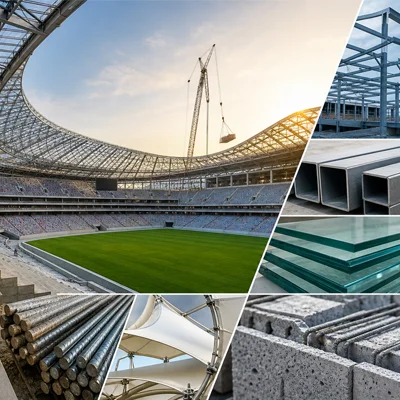
If you’ve seen how stadiums are being built today compared to even 15–20 years ago, the difference is obvious. It’s not just about scale anymore. It is concerned with the performance of such spaces over time, their crowd capacity, weather, and even energy consumption.
And a lot of that comes down to materials.
Choosing stadium construction materials today isn’t just about what’s strong or affordable. It’s about what lasts, what reduces future headaches, and what actually makes sense over 20–30 years of use. That’s why conversations around sports venue materials have become much more detailed than before.
It’s Not Just About Strength Anymore
Earlier, the approach was simple—use concrete for mass and steel for structure. That still holds true to an extent. But now, those materials are expected to do a lot more.
A modern stadium needs to:
- Handle large, moving crowds without stress issues
- Stay functional in extreme heat, rain, or humidity
- Require minimal maintenance despite heavy usage
- Meet sustainability expectations from investors and regulators
This is where high-performance building materials for stadiums come into the picture. They’re not necessarily new materials—but better versions of what already exists.
Concrete Has Changed Quietly
Concrete is still everywhere in stadium construction. But what’s interesting is how much it has evolved without most people noticing.
You now have mixes that:
- Crack less
- Last longer in coastal or humid environments
- Require fewer repairs over time
In some projects, ultra-high-performance concrete is used in key structural areas where failure simply isn’t an option.
There’s also experimentation happening with self-healing variants. It’s not fully mainstream yet, but the idea is simple—reduce long-term repair work.
For large venues, this kind of improvement matters. Over time, it directly impacts how “durable” the infrastructure actually is.
Steel Is Still Doing the Heavy Lifting
Walk into any large stadium and look up—the roof structure alone tells you how important steel still is.
But again, it’s not the same steel as before.
Newer grades are:
- Stronger for the same weight
- Better at resisting corrosion
- More reliable in outdoor exposure
This is what allows those massive open spans—no pillars blocking views, no clutter. Just clean, open design.
Steel, in many ways, is still at the center of advanced materials for stadium construction, especially where design meets engineering.
Lighter Structures Are Becoming the Norm
One noticeable shift in recent projects is the push toward reducing weight.
Why does that matter?
Because lighter structures:
- Put less pressure on foundations
- Are quicker to install
- Often cost less to transport and assemble
More aluminum, engineered wood, and composite systems will be used in places where concrete or steel are not needed.
These are lightweight and high strength construction materials that are particularly applicable in roofing systems and facade elements.
Composites Are Quietly Solving Problems
The composites are not as much discussed, but they are becoming more prevalent.
In practical terms, they help in areas where:
- Corrosion is a concern
- Weight needs to be minimized
- Maintenance access is difficult
Fiber-reinforced materials, for example, are being used in reinforcement and retrofitting work. They’re not replacing steel—but they’re complementing it in smart ways.
That’s why they’re becoming part of advanced construction materials for sports facility design, especially in renovation projects.
Roofing Has Become a Big Deal
Earlier, roofs were mostly functional—just cover the seating and protect from rain.
Now, they do a lot more.
Modern roofing systems influence:
- Natural lighting inside the stadium
- Heat gain and cooling needs
- Overall fan comfort
Materials like ETFE have gained attention because they’re light, flexible, and allow daylight in without adding too much load.
Meanwhile, tensile structures made of fabrics are being implemented where conventional systems would be prohibitively expensive or heavy.
These are usually regarded as some of the best materials that can be used in constructing a stadium that is durable and sustainable, particularly when the aim is to make the structure energy friendly.
Sustainability is No Longer an Option.
It is most likely the largest change over the past ten years.
Clients, investors, and even audiences demand large venues to be responsible in the environment.
That directly affects material choices.
Some common changes include:
- Using recycled steel instead of new production
- Reducing cement content in concrete mixes
- Investigating engineered timber in non-critical buildings.
These choices are not necessarily simple ones- they entail trade-offs. Nonetheless, they are driving the industry to more sustainable construction materials in general.
Durability Still Drives Everything
No matter how advanced materials become, one thing hasn’t changed—stadiums have to last.
They’re expensive assets, and shutting them down for repairs isn’t practical.
So materials are evaluated based on:
- How they handle wear and tear
- How often they need maintenance
- How they perform after years of exposure
This is why durable materials for sports infrastructure are still the foundation of every decision, even when newer options are available.
Speed Matters More Than Before
Construction timelines today are tight, especially when tied to tournaments or international events.
To keep up, projects are relying more on:
- Prefabricated components
- Modular assemblies
- Pre-engineered systems
These approaches reduce on-site work and improve consistency.
But they also depend heavily on advanced materials for stadium construction that can be manufactured off-site and assembled quickly without quality loss.
One Stadium, Many Material Choices
There’s no single material that works everywhere in a stadium.
Different parts require different solutions:
- Structural areas: high-strength concrete and steel
- Seating systems: precast or modular materials
- Façades: lightweight panels or glass systems
- Walkways: high-wear, slip-resistant surfaces
This is the reason why the choice of the appropriate sports venue materials is more of a combination rather than a choice.
Cost Conversations Have Changed
Earlier, the focus was mostly on initial cost.
Now, developers are asking a different question:
What will this cost us over 25 years?
That includes:
- Maintenance
- Repairs
- Energy consumption
- Replacement cycles
In many cases, spending more upfront on the best materials for durable and sustainable stadium construction actually reduces long-term expenses.
What’s Coming Next
The material side of stadium construction is still evolving.
Some things already being explored:
- Low-carbon concrete alternatives
- Smart materials that monitor structural health
- Recyclable building systems
- 3D-printed components for faster builds
Although not all these are mainstream yet, they indicate the direction of high-performance building materials used in stadiums.
Final Take
There’s no single “best” material for a stadium anymore.
It is the combination of materials, their balance in terms of strength, weight, durability and sustainability.
The trend is clearly in a smarter, more efficient combinations in the industry. And to anyone working on the planning or construction of sports facilities, the need to learn about these changes is not a choice, but a requirement.
Since ultimately, a stadium is not assessed on its appearance on opening day, but its functionality a few years down the road.
 Media Pack Download
 Newsletters
 Industrial Events