
Designing the Future Stadium: Sustainability, Fan Flow and Multi-Use Spaces
Introduction
If you look at stadiums built 15–20 years ago, most of them were solving a fairly narrow problem: how to get thousands of people in, seated, and out again without chaos.
That definition feels outdated now.
Now-a-days, a stadium is a business. It should be profitable outside of the event season, be sustainable and also offer an experience that might entice punters from the home. That's no small challenge.
Now that is why we hear so much about sustainable stadiums, better stadium designs and multi-use stadiums - not because it’s fashionable, but because it is becoming a necessity. The real shift, though, is that these elements can’t be handled separately. They overlap more than most project plans initially assume.
Sustainability: Less About Optics, More About Operations
There’s been a quiet correction in how sustainability is approached in stadium architecture.
Earlier, it leaned heavily on optics—visible solar panels, green certifications, that sort of thing. Those still matter, but the focus has moved deeper into operational efficiency.
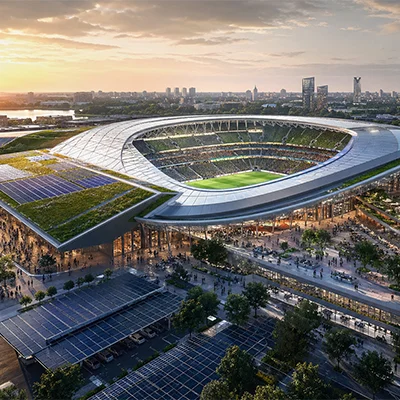
Many sustainable stadium design solutions are actually quite unglamorous on paper. Better insulation. Smarter lighting systems. Structural materials that reduce long-term impact rather than upfront cost. This is the stuff that makes a difference, but it's not news.
We all know about energy, but don't always consider water. Water usage is high on high-capacity days. So, we are seeing more of these systems, such as re-use networks and rainwater harvesting - not only because it is environmentally friendly, but also because it is cost-efficient in the long term.
What's notable is the timing. They are being incorporated into the design, rather than added later. That’s a big shift.
Smart Infrastructure: What Fans Don't See
When we talk about stadium technology, many will think Internet or mobile apps.
But there's more to it than that.
The real impact of smart stadium infrastructure planning is happening in areas fans rarely notice. Sensors tracking crowd density. Systems adjusting energy use in real time. Maintenance alerts triggered before something fails.
These don't seem like much, on their own. Together they transform the stadium.
There is also an increasing use of data, not only for reporting but also for data-driven decision-making. For example, if a part of the stadium is getting pretty full, they can act immediately.
This is a less visible innovation, but possibly more significant than the features.
Fan Flow: Still Underrated, Still Difficult
Even now, crowd movement tends to be underestimated during planning.
And yet, when things go wrong, it’s usually because of this.
Effective fan flow and crowd management systems aren’t just about avoiding extreme scenarios. They’re about removing friction from the experience—shorter queues, easier navigation, fewer moments of confusion.
Some of it comes down to layout. Wider pathways, better placement of amenities, and more entry points help. But physical design has its limits.
What’s changing is the use of real-time inputs. Digital signage, app notifications, even staff deployment can now be adjusted dynamically. It’s not perfect, but it’s far more responsive than static planning.
There’s also more attention being paid to arrival and departure patterns. Coordinating with transport systems, staggering entry, and reducing bottlenecks outside the venue are all part of the picture now.
Multi-Use Design: Not Optional Anymore
There was a time when hosting a few concerts a year was enough to justify calling a stadium “multi-purpose.”
That’s no longer convincing.
Today’s multi-use stadium design concepts go much further. The trick is to get the stadium to be used on non-event days.
Here's the rub. Flexible design comes at a cost. A stadium designed for sports may not be the best for performance. Acoustics need to adapt. Logistics become more layered.
But the rewards are appealing.
Stadiums that are multi-use spaces for events and revenue generation, create a more stable revenue stream. Retail areas, dining zones, and corporate facilities can operate independently, which helps balance the financial model.
In newer stadiums, it isn't just the stadium that people want to see - it's part of a bigger development.
Fans' Expectations Have Shifted
Some people think fans want better seats, or TVs. Yes, but there's more. Fan expectations have changed in less dramatic ways.
Convenience is more important than it used to be. Queues, lack of clarity and poor service options are more noticeable - likely because they're being judged against the rest of the economy.
This is influencing future stadium design for sustainability and fan experience in subtle
Better navigation. Faster service. More intuitive layouts.
Digital tools are helping, but they’re not the whole solution. If the physical design isn’t right, technology can only compensate so much.
Environmental considerations are also becoming an issue. It may not be something that fans scrutinise, but they do see when a venue is making an effort.
Architecture Is Under More Pressure Than Before
From the outside, stadium design might still look like a creative exercise.
As a matter of fact, it is becoming complicated. A combination of versatility, functionality, aesthetics and affordability is the key of smart and sustainable design of new stadiums. Not always easy.
Modular construction is one response—it allows for quicker builds and future adjustments. Flexibility is also key, through adaptive spaces.
And there's more of a focus on open spaces. Light and ventilation are important both for esthetics and sustainability.
All this without over complicating the project.
Challenges That Don’t Go Away
New technologies and approaches do not necessarily provide all answers.
Cost is still a major consideration. The long-term gain of these technologies can be offset by the initial cost. Integration is another sticking point. Integration with other systems, from other vendors, can be complex.
And then there's the danger of "gold plating". And you can make things much harder to manage if you add too many features.
As a result, many projects are being more discriminating - focusing on what works.
Where This Is Headed
Yes, stadiums are changing, but not necessarily in one way.
Some are developing into tech-enabled spaces. Some are more sustainable, or more sociable.
The common thread is balance.
The next generation of stadiums will probably expand the trend towards mixed-use stadiums, with stadiums embedded in urban spaces. Technology will improve, but it won't win the day.
Ultimately, circulation, accessibility and affordability will still be the keys to success.
Conclusion
If there's one lesson to take away from this, it's that designing a stadium is no longer about one thing - it's many.
Combining sustainable stadiums, fan flow and crowd management systems and viable multi-use stadium design solutions demands a new approach.
Add to the mix smart stadium infrastructure design and changing expectations of stadium architecture and its clear there's no one size fits all.
Instead, it's about decisions that will stand the test of time - not just for the stadium's opening season, but decades later.
 Media Pack Download
 Newsletters
 Industrial Events